
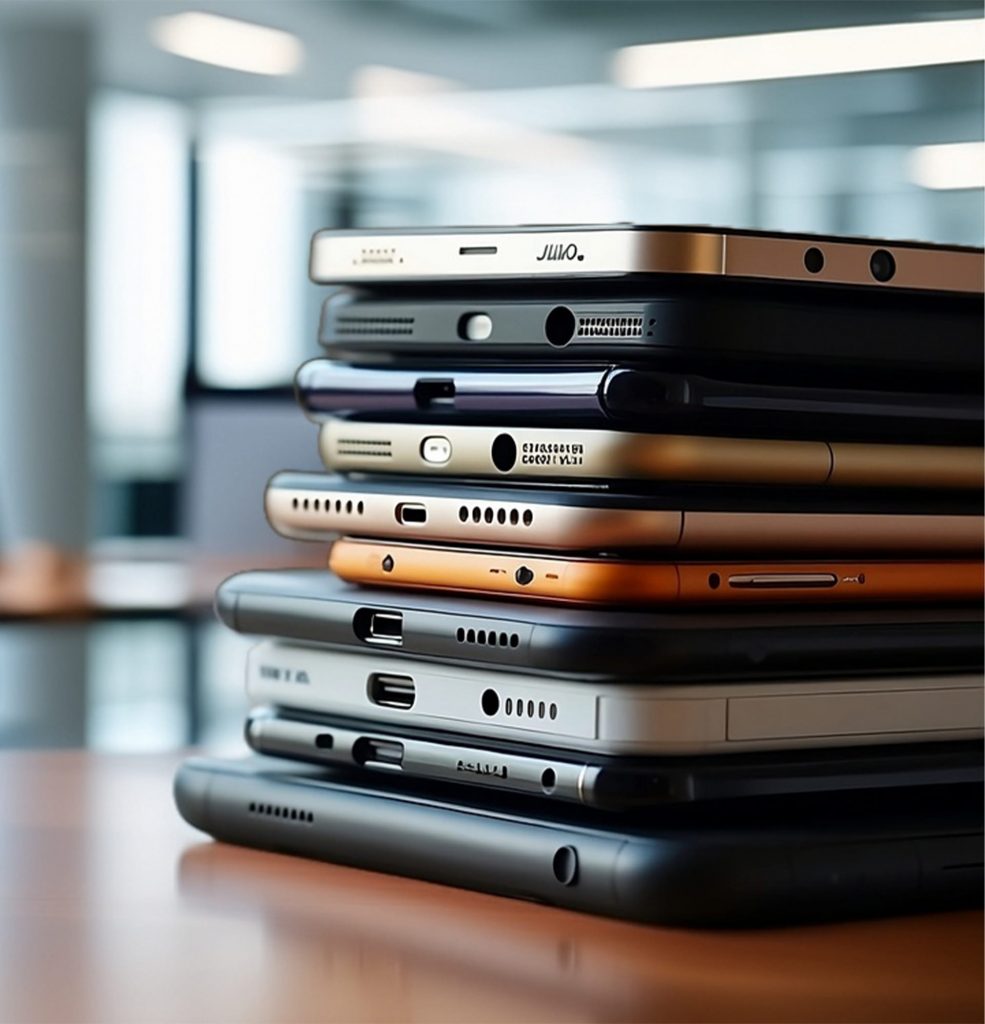

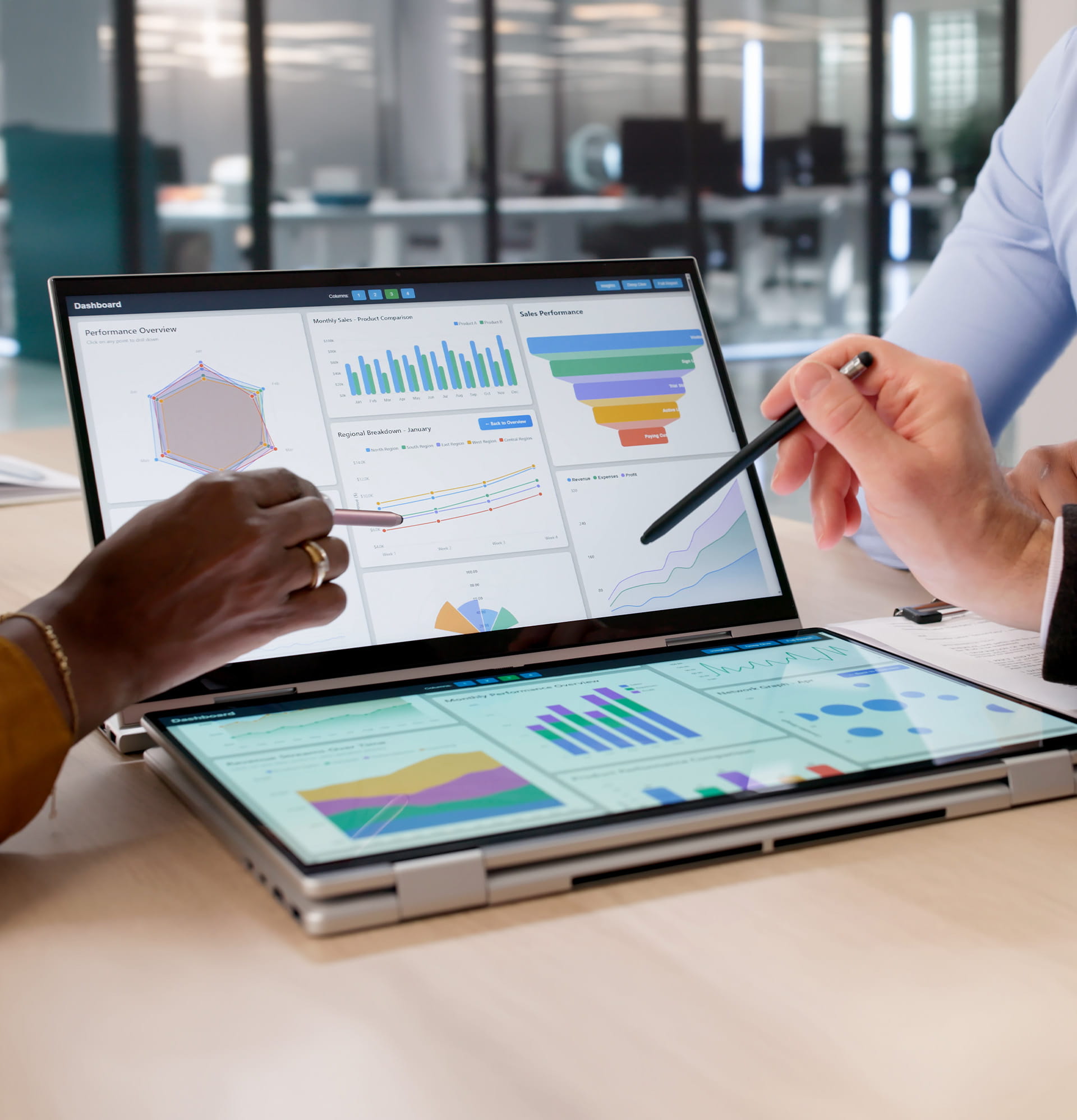
With TKD’s BuyBack offering, companies can sell decommissioned or unused IT assets securely, transparently, and cost-effectively – including certified data erasure, transparent processing, and a sustainable second lifecycle.
Unused devices retain value without delivering any benefit. BuyBack turns them into financial flexibility for new investments.
Unrecorded or uncontrolled stored devices increase risks. With a structured buyback process, you create transparency and strengthen your IT security.
Before devices move into the next LifeCycle, data is professionally and verifiably erased – directly at the TKD, without subcontractors.
Functional devices are professionally refurbished and reused. This conserves resources and supports responsible IT management.
From valuation to data erasure, processing is transparent and reliable. This builds trust at every step.
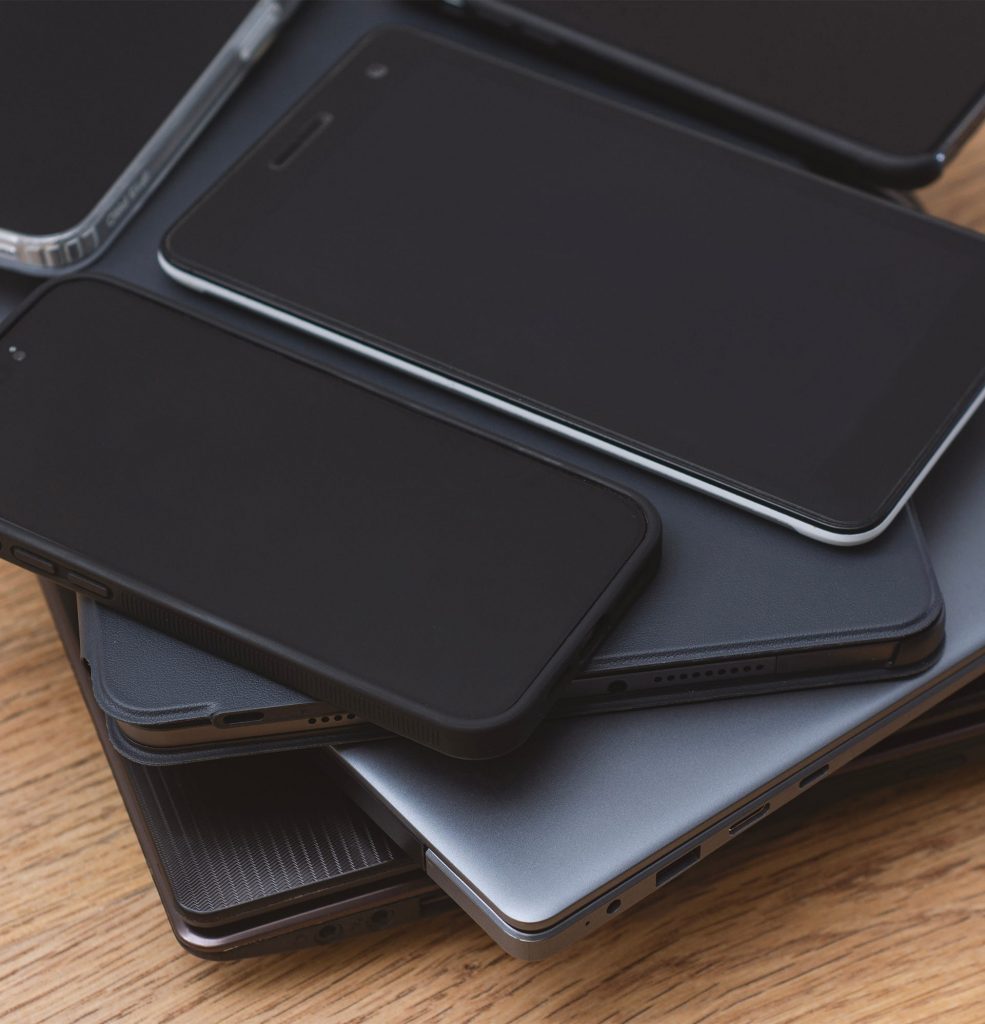
In many companies, unused smartphones, tablets, or notebooks sit in cupboards, warehouses, or decentralized inventories. Often, there is a lack of transparency about which devices still have value, what data is stored on them, and how they can be removed from inventory securely. This is exactly where BuyBack comes in: instead of managing legacy stock or decommissioning devices in an unstructured way, you establish a clear process for return, valuation, data erasure, and remarketing.
Devices lose value over time as long as they remain unused.
Unrecorded legacy devices can become an entry point for compliance and data protection issues.
Every device that is reused extends its lifecycle and reduces unnecessary resource consumption.
Companies provide us with key data on the devices or have an assessment created based on central characteristics.
We assess IT assets based on age, manufacturer, model, performance data, as well as visual and technical condition.
The devices are collected, securely taken over, and fed into the next steps of the process.
Before any further utilization, professional and verifiable data destruction is carried out.
Suitable devices are refurbished and reused.
The device value is paid out or can be offset against agreed services.
BuyBack is particularly suitable for mobile devices and typical workplace hardware that is no longer actively used but still has market value.
Examples
Key factors for valuation include device category, manufacturer, model, age, technical specifications, and condition.
BuyBack is more than a buyback. It is a contribution to more responsible handling of IT assets. Devices that are technically suitable are refurbished and reused. This keeps raw materials in the usage cycle longer, and companies make a tangible contribution to conserving resources.
Those who use BuyBack strategically combine economic goals with sustainable action – without additional administrative effort.
Buying back mobile IT assets only makes sense if companies can rely on the secure removal of sensitive data. That is why certified data erasure is a core component of the BuyBack process.
At TKD, this step is carried out directly in-house. This gives you transparency over the process and minimizes risks that can arise from non-transparent third-party processing.
Pricing is based on factors such as age, manufacturer, model, performance data, and the devices’ visual and technical condition. In addition, an offer can be created based on defined core characteristics, such as CPU generation, drive type, or display size.
Depending on the setup, logistics and certified data destruction can be included in the calculation. This creates a model that fits your inventory and your processes.
BuyBack means that unused or decommissioned mobile IT hardware is purchased by the TKD, processed securely, and – if suitable – moved into a second lifecycle.
BuyBack creates liquidity, reduces shadow IT, strengthens data security, and supports sustainable IT processes.
Primarily mobile devices such as smartphones, tablets, and notebooks, as well as other suitable devices subject to review.
Based on factors such as age, manufacturer, model, performance data, and condition. Alternatively, a standardized valuation can be carried out based on defined characteristics.
Before further utilization, certified data erasure is carried out directly at the TKD.
Yes, especially if companies want to establish structured return processes and reduce inventories economically and securely.