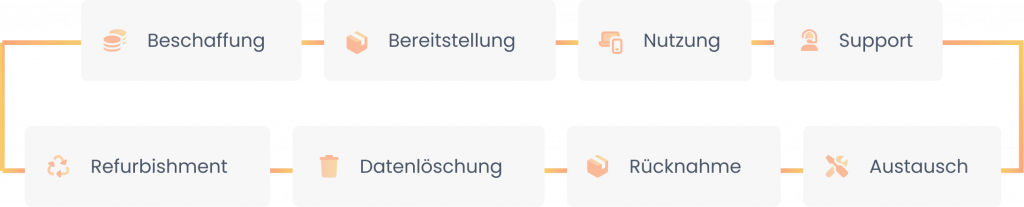
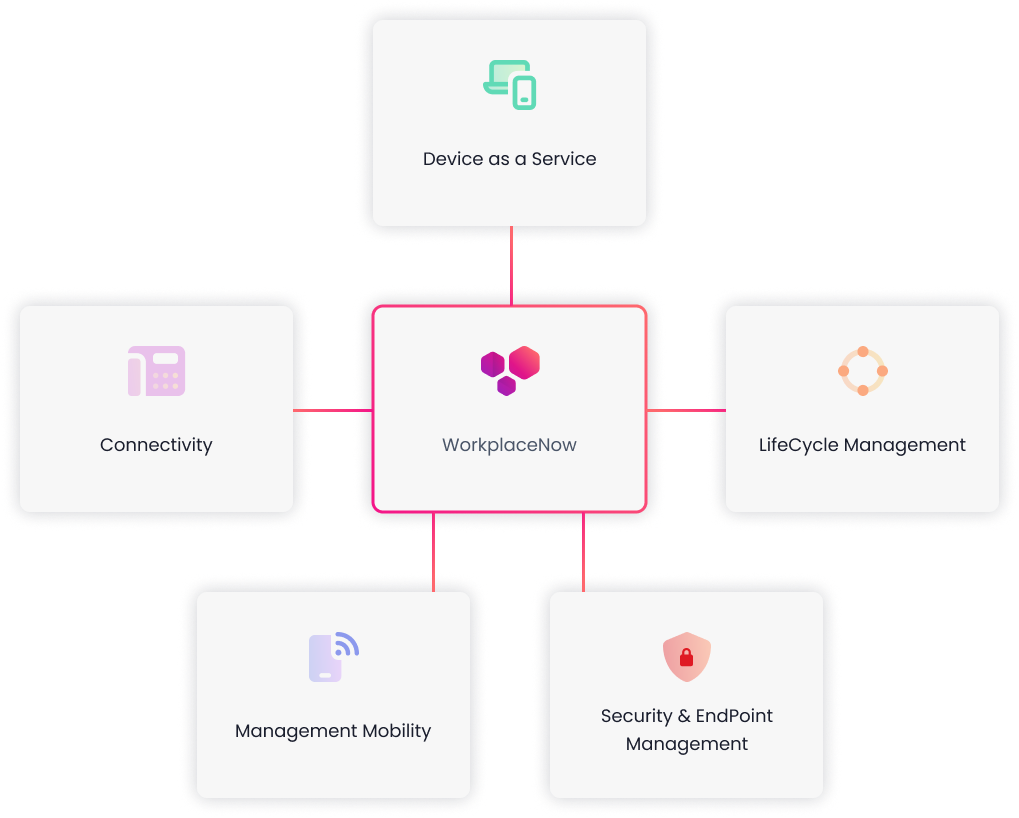
The TKD transforms traditional individual processes into a continuous LifeCycle model. WorkplaceNow connects all steps within a single platform, creating the foundation for efficient, scalable IT asset management.
IT LifeCycle Management describes the holistic management of smartphones, tablets, and notebooks. From procurement and deployment to usage, return, and recycling. LifeCycle Management can be used as an individual solution for purchased, leased, and subsidized IT hardware, or fully integrated into the Device as a Service model.
Companies gain structure instead of isolated solutions, more transparency over their IT assets, and significantly reduced operational effort.
With TKD as a service provider, these processes are outsourced and fully digitized. This creates a centrally controlled system that makes the entire LifeCycle efficient and scalable.
Operational tasks related to procurement, management, and return are outsourced
Standardized workflows replace individual solutions and reduce sources of error
Current overview of device inventory, usage, and status at all times
Both repairs and necessary spare parts are included in the Care Package
Shopping carts and bundles are defined in the portal, standardizing device selection for different roles
Interfaces to existing systems like Entra ID enable automated user creation directly in the portal
Individual approval and role logic are mapped in the portal, automating decision-making processes
Devices are pre-configured with system support and delivered on schedule to defined addresses
All devices are recorded in the portal and can be viewed at any time with their status, user, and location
Employees use the portal to independently request devices or services
Incidents are reported centrally in the portal and trigger standardized service processes such as 24-hour exchanges
Dashboards in the portal offer complete transparency over device inventories, usage, and costs
Access and permissions are controlled and clearly defined in the portal
The portal connects existing IT systems and creates a central control level
Returns are initiated and processed in a structured manner via the portal
The status of returned devices and their further processing is transparently displayed in the portal
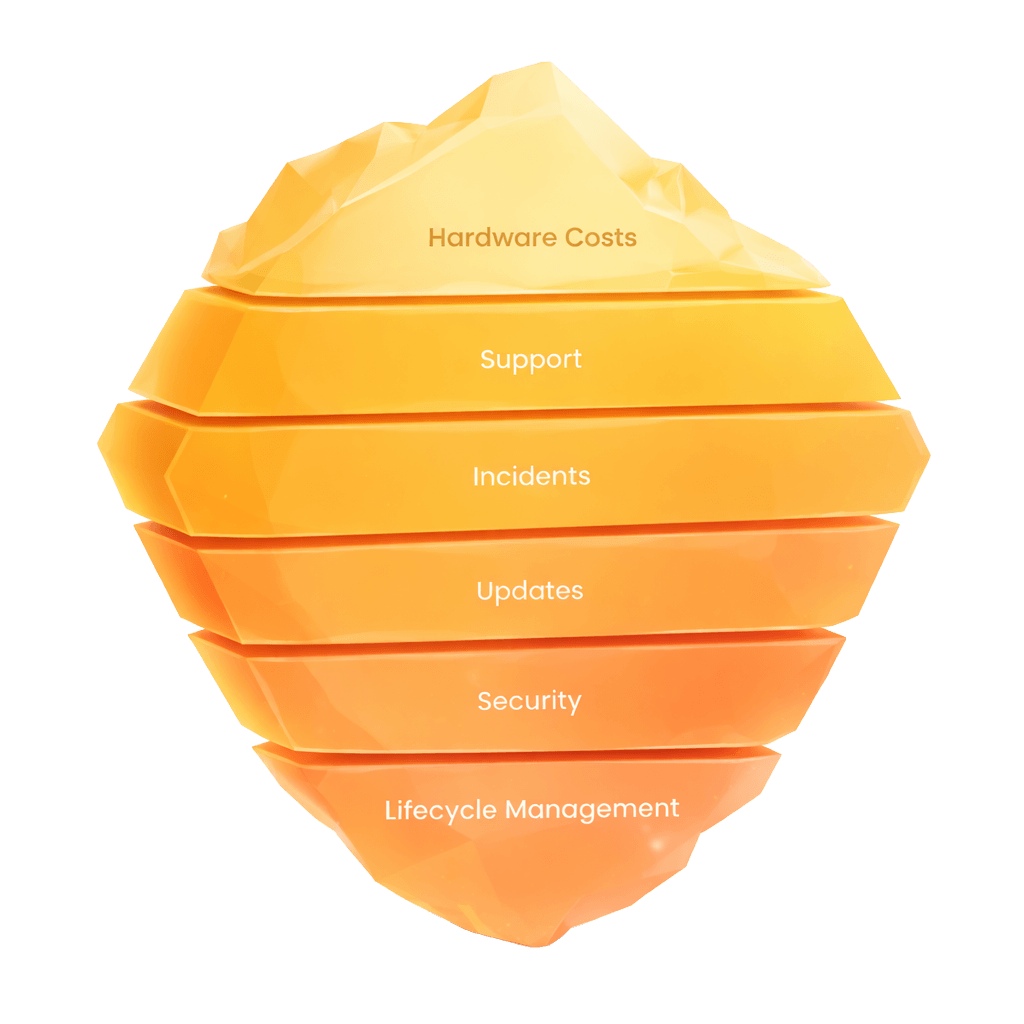
Companies still primarily evaluate end devices based on acquisition costs. This is understandable – but short-sighted. Because the economic leverage lies not solely in procurement, but in the entire Total Cost of Ownership.
The costs of an end device do not only arise at the time of purchase. They arise in configuration processes, in rollouts, in malfunctions, in ticket efforts, in exchange cycles, in returns, in data deletion, and in residual value management.


60–70% of mobile device costs occur after purchase, with only about 20% of TCO attributed to hardware price.
The LifeCycle Model fully covers all phases of device management and creates a stable foundation for operations.
Additional options specifically extend the LifeCycle with further functions and services. This creates a model that adapts to individual requirements and generates additional value.


From SMEs to enterprise environments: Companies use WorkplaceNow to centrally manage their smartphones, tablets, and notebooks, and simultaneously trust the TKD as a service provider for operational implementation. This results in stable processes, clear responsibilities, and measurable relief in IT operations.
Trust that pays off: DaaS model with long-term customer loyalty and renewed
contract extension
TKD offers enterprise companies a structured evaluation of their existing end-device fleet.
IT LifeCycle Management does not end with a single process. It is part of a comprehensive structure that can be flexibly expanded and combined.
Within the WorkplaceNow ecosystem, LifeCycle Management is seamlessly integrated into a broader service portfolio. All modules interlock, are centrally controllable, and can be individually adapted – for a solution that grows with the demands of businesses.