The finance and insurance industry is highly regulated and at the same time under increasing pressure to transform. The TKD ensures that smartphones, tablets and notebooks can be procured and managed securely, transparently and centrally.
The finance and insurance industry is among the most heavily regulated sectors in Europe.
Trust, data security and stability are key prerequisites for business operations.
At the same time, the requirements for digital workplaces are continuously increasing:
Smartphones, tablets and mobile devices are key tools in the finance and insurance industry for accessing systems, data and processes.
Mobile IT assets are access points to sensitive data—and therefore part of the security architecture.
In branches and offices, mobile devices enable flexible advisory services, access to applications and secure interaction with customers—independent of a fixed workstation.
In field service, smartphones and tablets form the basis for digital advisory services, contract signings and direct access to systems—anytime and anywhere.
In the back office, notebooks and tablets support hybrid working models and enable secure access to internal systems, documents and processes.
For management, mobile devices provide direct access to KPIs, reports and systems—regardless of location and time.
External partners and service providers also access systems. Mobile devices must be securely integrated, controlled and managed.
The complexity does not arise from the individual devices—but from a lack of transparency and control over their use and LifeCycle.
Devices are direct access points to sensitive data and systems.
Lack of control can lead to security risks, compliance violations and operational issues.
Control over devices means control over data.



Procurement and LifeCycle concepts that adapt to regulatory requirements and organisational structures.
Standardised processes and integrated service management ensure that devices are provided, managed and operated efficiently.

With IT asset management within WorkplaceNow, companies gain complete transparency over all devices in use.
Usage, LifeCycle status, access and costs are centrally visible, enabling controlled management of mobile devices within the organisation.
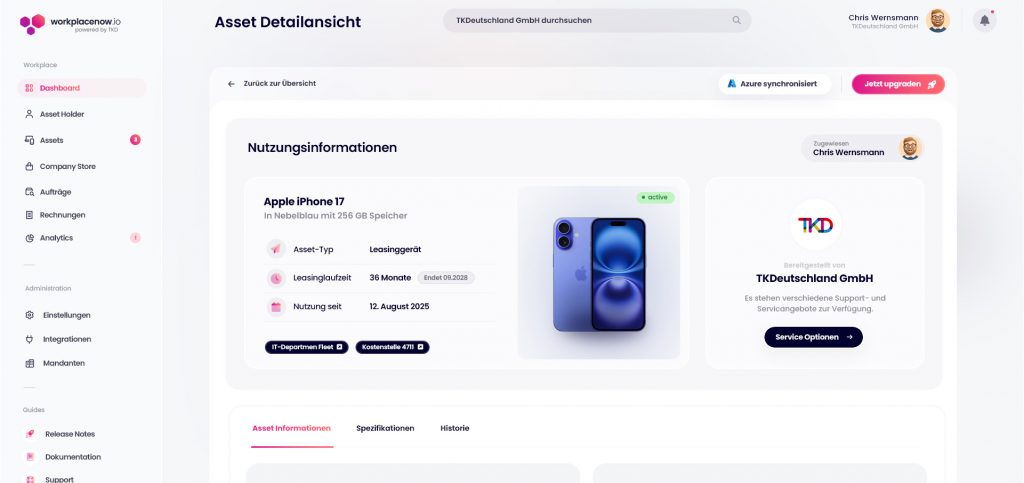
Central control of mobile IT assets across locations, user groups and organisational units.
LifeCycle processes—from provisioning and use through to replacement and return—are clearly defined and managed in a traceable way. This creates the basis for secure, standardised and auditable processes.

The TKD integrates into the existing IT and system landscapes of banks and insurers.
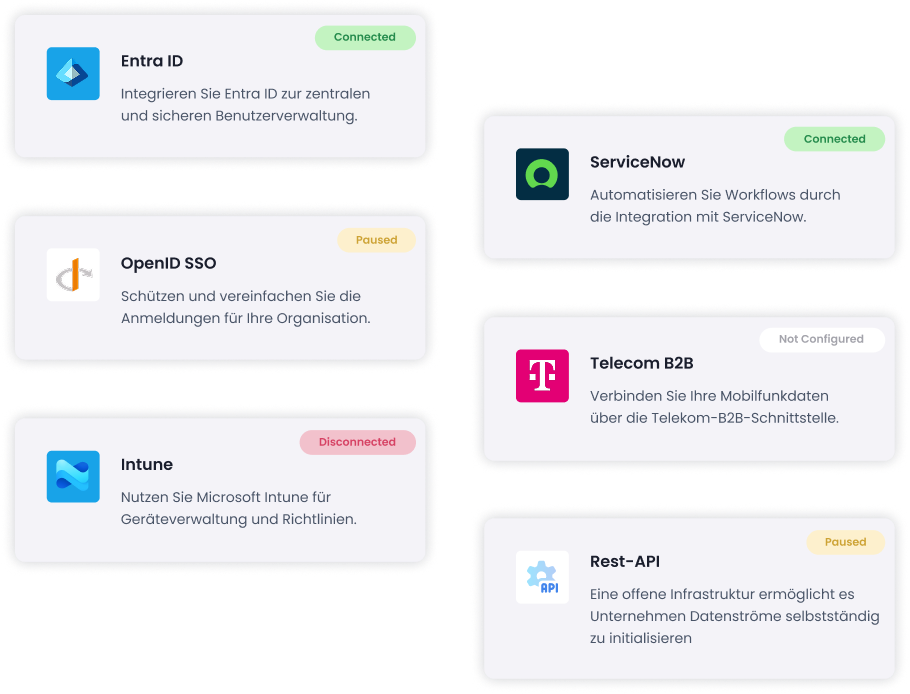
This includes connections to mobile network operators and carriers as well as integrations into existing platforms, for example with Microsoft or ServiceNow.
This creates a workplace system that extends existing structures without replacing them—while enabling central control and governance.